

24 Apr Top FAQs About Helical Piers Answered
Discovering signs of foundation failure can easily be one of the most stressful moments for any property owner. Cracks in the walls, uneven floors, and doors that refuse to close properly all point to underlying structural issues. Ignoring these warning signs often leads to more severe damage and costly repairs down the road.
Fortunately, modern engineering offers highly effective methods for stabilizing and restoring compromised structures. One of the most reliable and widely used solutions in the industry is the use of helical piers. Also known as helical piles, these specialized tools provide deep foundation support capable of handling tremendous loads in challenging environments.
What exactly are helical piers?
Helical piers are deep foundation underpinning elements constructed from heavy-duty steel shafts with helical (screw-like) bearing plates welded to them. They act much like large screws that are driven deep into the earth. Rather than relying on the unstable soil near the surface, these steel shafts bypass weak layers to anchor your structure into competent, load-bearing soil or bedrock.
How does foundation repair with helical piers work?
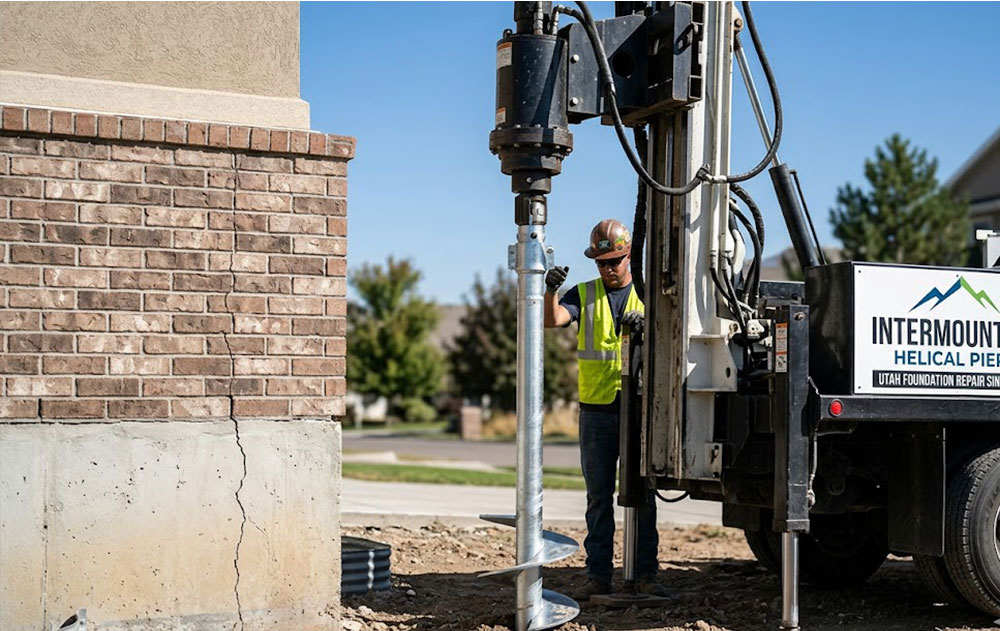
The process is systematic and relies heavily on engineered designs. First, a thorough site evaluation assesses soil conditions and settlement extent. During installation, hydraulic equipment rotates the piers into the ground. Once they reach the necessary depth and torque requirements, steel brackets are attached to the foundation footing, and the weight of the structure is carefully transferred onto the piers.
Why choose helical piles over traditional concrete?
Traditional concrete footings often require extensive excavation and significant curing time. Helical piles offer several distinct advantages:
- Minimal Disruption: A very small footprint reduces excavation needs, noise, and site disturbance.
- Immediate Load-Bearing: Unlike concrete, which takes weeks to cure, a helical pier can support structural loads the moment it is installed.
- Efficiency: Ideal for commercial and industrial settings where limiting downtime is critical.
Can they be installed in challenging soil conditions?
Absolutely. Helical piers excel where other systems fail, especially in Utah’s unique geology. High water tables, variable soils, and seasonal freeze-thaw cycles can wreak havoc on shallow foundations. By driving piers deep beneath these active zones, your foundation remains unaffected by shifting surface moisture or temperature changes.
How long do these foundation systems last?
When installed by professionals, helical piers provide a permanent solution. Manufactured from high-strength, often galvanized steel, they resist corrosion and rust even in acidic soils. These systems are designed to last the lifetime of the structure they support, backed by verified load testing and robust warranties.
Are they suitable for heavy commercial and industrial projects?
Yes. They are frequently used for heavy-duty support in new construction, tie-backs, shoring, and stabilizing large-scale existing facilities. Because they can be installed quickly in tight spaces, they are the preferred choice for industries that cannot afford extended operational shutdowns.
Secure Your Foundation with Confidence
At Intermountain Helical Piers, we have provided Utah-focused expertise since 1994. We offer reliable, engineered solutions tailored to your specific load requirements and local geology.
If you suspect settlement issues or are planning a new project in difficult soil, contact us today to schedule a no-cost site evaluation. Call us directly at (801) 495-1830 to ensure your property stands on a foundation built to last.
No Comments